
Australian Pharma Trends: 5 Takeaways from NEXT Australia ’26
August 27, 2026
Pharma’s changing influence
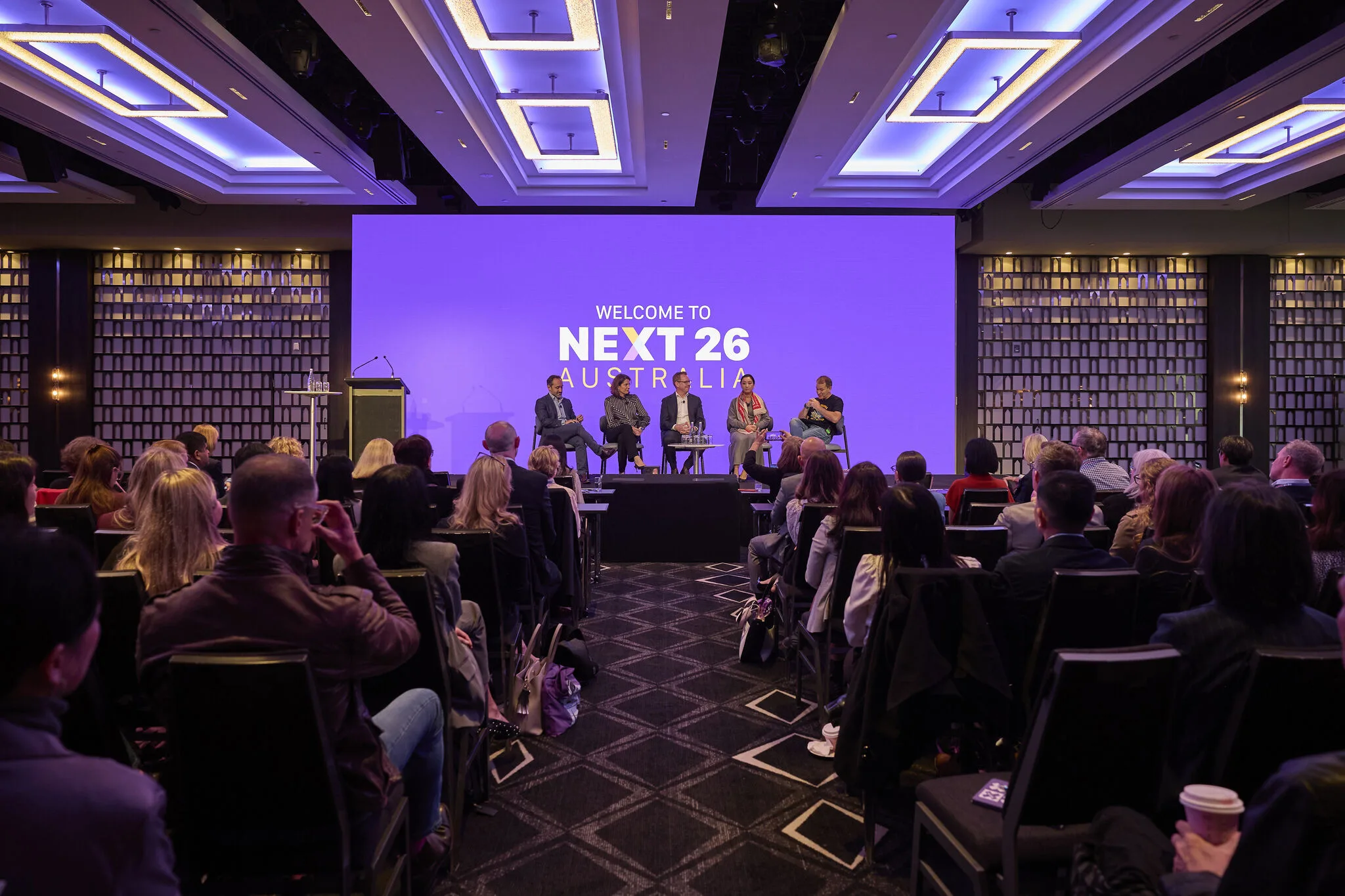
The 2026 NEXT Pharma Summit brought Australian pharma together for two days of discussion about the challenges it is facing and what needs to change. The areas of focus were no surprise – access remains slow, traditional engagement models are being disrupted, AI is changing how people find and interpret health information, and patients are becoming more informed and influential.
But these are complex challenges, with no easy solutions. From a communications perspective, many of the discussions pointed to a similar shift: who holds influence, where information comes from and who needs to be part of the conversation are changing.
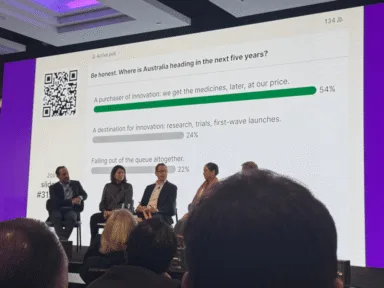
The industry is at boiling point. Australia isn’t.
A very clear view within the meeting was the pharmaceutical industry clearly sees pressure building around medicines access and the urgent need for change. The broader Australian public however, largely doesn’t, because most people don’t know what medicines they’re missing or what may already be available elsewhere.
That leaves the Australian pharmaceutical industry with limited leverage. Without public awareness and pressure, there is less incentive to make significant changes to the system, regardless of how urgent the need for reform may feel within the industry.
Patients with rare or complex conditions can be the exception. They are often highly informed and acutely aware of what isn’t available in Australia, but they represent a relatively small proportion of the broader population.
Changing this needs to be an industry-wide effort. Pharma can’t be the only voice making the case. Patients and HCPs also have an important role in showing Australians what delayed access actually means, what they may be missing and why it matters.
The Access challenge is bigger than the PBS
Another strong theme was that continuing to focus on securing more funding for the PBS alone isn’t going to solve the problem.
The access conversation needs to consistently reach beyond health. The value of medicines needs to be considered through a broader lens including productivity, workforce participation, economic impact and wider societal value. That means engaging Treasury, Finance and the Productivity Commission alongside the Department of Health.
Practically, this changes who we’re communicating with and how the value story is told. Clinical outcomes remain fundamental, but economic participation, workforce impact and the cost of delayed access need to be part of the conversation too.
Patients are gaining more influence over treatment decisions
Traditionally, pharma has focused much of its communications and marketing investment on HCPs, who held most of the information and influence over treatment decisions. That’s shifting.
Patients now have access to more health information than ever before. They are researching conditions and treatments and arriving at appointments with questions, expectations and, in some cases, clear views about their options. At the same time, HCPs are increasingly using AI to find and synthesise information that may previously have been delivered through more traditional channels.
HCPs remain central to treatment decisions, but they are no longer the only source of information shaping those conversations.
For pharma, that raises an important question: does the current balance of communications and marketing investment reflect where influence now sits?
AI is becoming an information intermediary
Much of the discussion about AI in pharma understandably focuses on how companies can use it. But there is another question that matters just as much: how are patients and HCPs already using it?
Increasingly, an AI platform may sit between an organisation and the person it is trying to reach, finding, synthesising and interpreting information from multiple sources.
The question for pharma therefore needs to move beyond “How do we use AI?” to “What does AI know about our disease area, treatment landscape and organisation, and where is it getting that information?”
Pharma can’t directly control what an AI model says, but it can pay closer attention to the quality, authority and accessibility of the information surrounding a topic: what information exists, which sources carry authority and where important gaps remain.
That’s a communications and content strategy question as much as a technology one.
Cube’s AI Visibility Index shows just how varied that information environment already is. Across more than 12,500 AI-generated health responses, we found significant differences in how treatments, brands and healthcare companies are surfaced depending on the AI model, audience and question being asked.
For the pharmaceutical and biotech industry, understanding how your organisation and disease areas currently appear in AI-generated answers is an important first step. From there, communications strategies can focus on strengthening the accurate, authoritative information available to the frontier models patients and HCPs are increasingly using.
Explore the AI Visibility Index
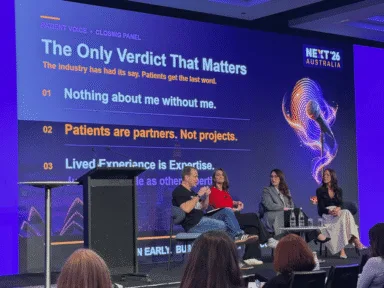
We aren’t fully harnessing the value of patient and advocacy partnerships
Patients, advocacy organisations and NFPs bring significant value across the therapeutic journey, but that value isn’t always fully harnessed.
Their insights can help pharmaceutical companies better understand the problem, identify what patients genuinely need, understand the barriers they face and shape solutions that are more likely to work in the real world.
That means involving them much earlier and working with them for longer, rather than bringing them in towards the end to validate or endorse something that has already been developed.
Their influence also extends beyond direct partnership. Patient and advocacy organisations are important and trusted sources of health information in their own right. Their content and community conversations contribute to the broader information environment that patients, HCPs and increasingly AI systems may draw upon.
Their value therefore goes well beyond endorsement. They bring insight, credibility and influence that can be valuable across the entire therapeutic journey.
The prescription isn’t the finish line
Only 52% of people who fill a prescription go on to fill a second, 49% adhere to their medication and just 31% remain persistent with chronic therapy at 12 months.
Those figures raise a bigger question: is enough communications investment following the patient after the prescription is written? If such significant drop-off happens after the prescribing decision, there is a clear case for greater focus on the communications, information and support that help patients start and stay on treatment.
Pharmacy is particularly important in that context. With 89% of people returning to the same pharmacy to refill a prescription, it represents an important and potentially underused point of connection with patients.
For pharma, the opportunity is to look at the balance of communications investment across the full treatment journey, rather than concentrating so heavily on getting to the prescribing decision.
What’s next for the Australian pharmaceutical industry?
None of these challenges has a simple answer. But the conversations at NEXT reinforced that continuing to focus on securing more funding for the PBS alone isn’t going to solve the problem, nor will simply doing more of what has traditionally been done.
For communications, there are some clear areas to consider: broadening who is part of the access conversation; recognising the significant influence of patients; involving patient and advocacy organisations earlier and for longer; understanding how AI is changing the information environment; and thinking beyond the prescription when planning the patient journey.
The next 12 months are expected to be a formative time for the Australian pharmaceutical industry, with many of these conversations likely to evolve. We look forward to seeing where they have moved when the industry comes together again at NEXT Australia in 2027.
Want to explore what these shifts could mean for your access, patient or HCP communications strategy?

Author
Annabel Longden
Annabel is a Senior Digital Account Manager at Cube, with five years' experience leading digital health communications and campaigns across oncology, ophthalmology and autoimmune conditions. She specialises in translating complex healthcare messaging into compliant, engaging digital strategies for patients, healthcare professionals and corporate stakeholders, spanning disease awareness campaigns, product launches and corporate communications. With a background in Biology, Annabel combines data-driven strategy with authentic patient advocacy, including several years advising the National Rheumatoid Arthritis Society (UK) on communicating with young people living with arthritis.

